A central air conditioner should make your home feel consistently comfortable, not leave one bedroom warm, the main floor chilly, and your utility bills higher than expected. That result starts well before the equipment arrives. A professional central air conditioner installation is a complete comfort project involving load calculations, ductwork, airflow, electrical requirements, drainage, and careful commissioning.
For homeowners, builders, and property managers, the goal is simple: dependable cooling that fits the property, operates efficiently, and can be serviced for years to come. The right installation process protects that investment and helps create healthier, more comfortable indoor spaces throughout the cooling season.
Start With the Home, Not the Equipment
It is tempting to choose an air conditioner based on the size of the old unit or a quick square-footage estimate. Neither approach tells the full story. A home’s cooling demand is shaped by insulation, window orientation, ceiling height, air leakage, occupancy, sun exposure, and the performance of the duct system.
A qualified HVAC contractor begins with a detailed assessment. This helps determine the correct cooling capacity, often expressed in tons or BTUs, for the actual conditions of the property. Equipment that is too small may run constantly on the hottest days without reaching the desired temperature. Equipment that is too large can cool the space too quickly, shut off before removing enough humidity, and cycle more often than it should.
Humidity control matters as much as temperature. In many homes, a properly sized system feels more comfortable at a reasonable thermostat setting because it removes moisture steadily. That is one reason bigger is not automatically better.
What a Central Air Conditioner Installation Includes
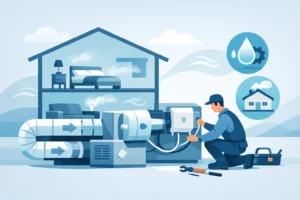
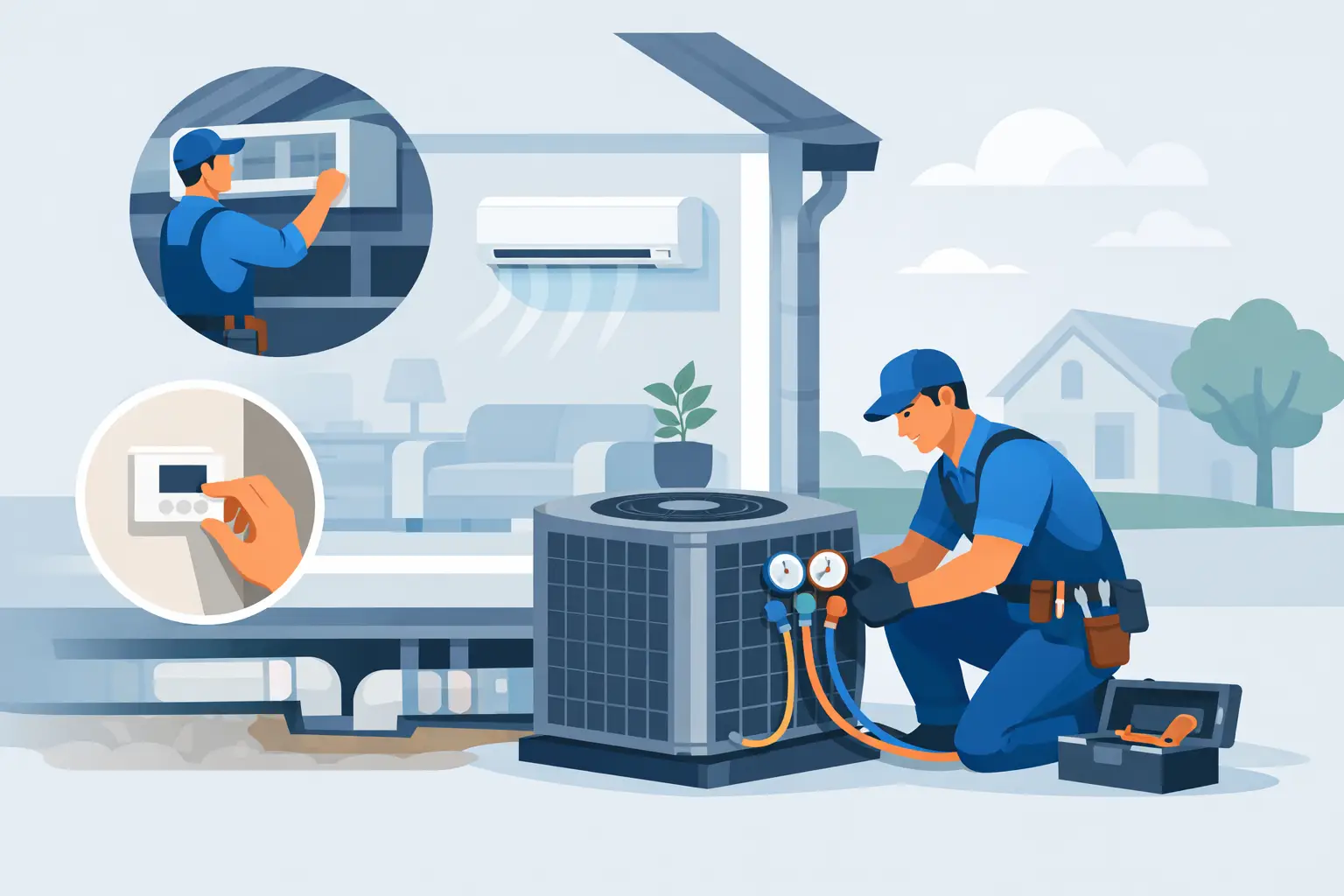
A complete installation is more than setting a condenser outside and connecting it to the furnace. Each component must work together as one system. In a typical forced-air home, the outdoor condensing unit releases heat collected from indoors, while an indoor evaporator coil absorbs heat from the air moving through the ductwork.
The work generally includes reviewing the existing heating equipment, selecting a compatible indoor coil, installing or replacing refrigerant lines where required, and connecting the outdoor unit on a stable base. The technician also installs a properly trapped condensate drain, verifies electrical disconnects and circuit capacity, and confirms that safety controls are in place.
The final stages are especially important. Refrigerant piping must be pressure-tested, evacuated to remove moisture and contaminants, and charged according to manufacturer specifications. Airflow across the indoor coil must also be measured and adjusted. Skipping these details can reduce efficiency, shorten equipment life, and cause comfort problems that are difficult to diagnose later.
Ductwork Can Make or Break Comfort
Even an excellent air conditioner cannot overcome undersized, leaking, poorly routed, or unbalanced ductwork. If certain rooms have always been uncomfortable, the issue may not be the air conditioner alone. It may be a supply duct that is too small, inadequate return-air pathways, or air escaping into an attic, crawlspace, or mechanical room.
A thoughtful installation includes a ductwork review. Depending on the home, the solution may involve sealing accessible ducts, adding returns, adjusting dampers, resizing problem sections, or designing custom ductwork for a renovation or new build. These improvements can help distribute conditioned air more evenly and reduce strain on the system.
For larger residences, multi-level homes, offices, and high-rise units, zoning and smart controls may be worth considering. Separate zones can help manage areas with different sun exposure or occupancy patterns. They add complexity and cost, so they are not necessary for every property, but they can be a practical answer to persistent temperature differences.
Choosing Efficiency That Fits Your Priorities
Central air conditioners are available in a range of efficiency levels. Higher-efficiency equipment can reduce energy use, but the best choice depends on more than the rating on the label. Budget, expected time in the property, duct condition, electrical upgrades, and cooling habits all affect the value of an upgrade.
A homeowner planning to stay for many years may prioritize quieter operation, enhanced humidity control, and higher seasonal efficiency. A landlord or commercial property owner may focus on lifecycle cost, serviceability, and dependable performance across multiple spaces. Builders may need equipment that meets project specifications while integrating cleanly with the mechanical design.
Variable-speed systems can offer more even temperatures and quieter operation because they can run at lower output for longer periods. They are often an excellent fit for homes with comfort concerns, though they usually cost more upfront than a single-stage system. A personalized consultation should explain the trade-offs clearly rather than treating one option as right for everyone.
Prepare the Installation Area
Good installation planning prevents delays and makes future service easier. The outdoor unit needs adequate clearance for airflow and access. It should be positioned away from areas where sound may be disruptive, such as directly outside a bedroom window or beside a frequently used patio, while still meeting local requirements and manufacturer guidelines.
Inside, the furnace or air handler area must allow room for the evaporator coil, drain components, filter access, and future maintenance. If the existing furnace is aging, it may be sensible to discuss replacing the heating and cooling equipment together. Installing a new air conditioner onto an older furnace can work in some cases, but compatibility, blower performance, warranty considerations, and the furnace’s remaining service life should all be reviewed.
Electrical capacity is another early checkpoint. Some installations require a new dedicated circuit, disconnect, or panel work. Addressing this before installation day helps keep the project organized and ensures the equipment is protected.
Installation Day: What to Expect
Most straightforward residential replacements can be completed in one day, although extensive duct modifications, electrical upgrades, custom fabrication, or complex access can extend the schedule. Before work starts, the installation team should confirm the equipment selection, walk through the scope, and protect work areas as needed.
The old equipment is removed and handled responsibly. The new indoor and outdoor components are then installed, connected, and tested. A careful contractor will not rush directly to the thermostat test. They will verify airflow, refrigerant performance, drainage, electrical readings, and control operation before considering the system ready.
At the end of the appointment, you should receive a clear explanation of the thermostat, filter requirements, maintenance recommendations, warranty coverage, and any settings that affect comfort. Ask questions at this stage. Knowing how to use the system properly helps you get the performance you paid for.
Protect Performance After Installation
A new air conditioner still needs attention. Replace or clean filters on the recommended schedule, keep debris away from the outdoor unit, and avoid closing too many supply registers in an attempt to redirect air. Restricted airflow can create unnecessary wear and reduce cooling capacity.
Annual maintenance is a practical way to identify developing issues before a heat wave turns them into an emergency. A service visit can include cleaning the coil, checking electrical components, confirming drainage, inspecting refrigerant performance, and reviewing overall operation. For property managers and business owners, scheduled maintenance also makes budgeting and tenant comfort easier to manage.
If you notice weak airflow, new noises, water around the furnace, ice on refrigerant lines, or rooms that will not cool evenly, arrange service promptly. Small concerns are often easier and less expensive to correct when they are addressed early.
Comfort Is a Long-Term System Decision
The best central air conditioner installation is not defined only by the equipment model. It is defined by how well the entire system is designed, installed, tested, and supported after the work is complete. At Alfa Mechanical Inc., that means taking the time to understand the property and recommending a solution built around dependable comfort, efficient operation, and service you can rely on in every season.
A well-planned system gives you more than cooler air on a hot afternoon. It gives your household, tenants, or team a comfortable place to live and work – with a mechanical partner ready to help keep it that way.