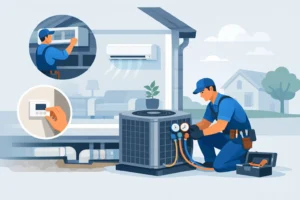

When winter heating leaves your skin dry, floors creaking, and static clinging to every sweater, portable units can feel like a losing battle. A professionally planned whole home humidifier installation adds moisture through your heating system, helping maintain more consistent comfort across the house instead of treating one room at a time.
For homeowners, the best result is not simply “more humidity.” It is balanced humidity that supports comfort without creating condensation on windows, moisture in ductwork, or unnecessary strain on the HVAC system. That is why equipment selection, ductwork details, water connections, drainage, and control settings all matter.
What a Whole-Home Humidifier Does
A whole-home humidifier works with a forced-air heating system to introduce controlled moisture into the air moving through the ductwork. A humidistat or smart thermostat monitors indoor relative humidity and signals the unit to operate when the air becomes too dry.
The goal is typically to keep indoor humidity within a comfortable, safe range. The exact setting depends on outdoor temperature, insulation levels, window performance, and how tightly the home is built. In colder weather, humidity may need to be reduced to prevent condensation from forming on cold glass or exterior surfaces.
Balanced humidity can make a home feel more comfortable at a lower thermostat setting. It may also help reduce dry throats, irritated nasal passages, static electricity, and shrinkage in wood flooring, trim, furniture, and musical instruments. Humidity is only one part of indoor air quality, but it can make a noticeable difference during the heating season.
Choosing the Right Humidifier for Your Home
Not every home needs the same style or capacity of humidifier. A qualified HVAC technician considers the home’s size, ceiling height, insulation, duct system, heating equipment, occupancy, and the amount of natural air leakage before making a recommendation.
Bypass humidifiers
A bypass humidifier uses the furnace blower and a bypass duct to move warm air through a water panel. It is a dependable option for many homes with compatible ductwork and adequate furnace runtime. It is often cost-effective, but its output depends on the heating system operating and on the available duct layout.
Fan-powered humidifiers
Fan-powered models use an internal fan to move air across the water panel. They can provide more output than a bypass unit and may be a good fit where duct space is limited or humidity demand is higher. Like any equipment choice, the added capacity should match the home’s needs rather than exceed them.
Steam humidifiers
Steam humidifiers create steam independently, giving them the highest output and the ability to operate with less reliance on hot supply air. They are often considered for larger homes, tightly built homes, houses with extensive wood finishes, or properties where precise humidity control is especially valuable. They also require electrical capacity and regular maintenance, so they are not automatically the right answer for every property.
A professional recommendation should account for the full HVAC system, not just the square footage on a product label. Oversizing can lead to excess moisture and window condensation. Undersizing can leave the home dry while the equipment runs without delivering the expected benefit.
What Happens During Whole Home Humidifier Installation
A proper installation begins with a look at the existing furnace or air handler, supply and return ducts, available space, water source, electrical requirements, and drain access. This assessment identifies whether the selected unit can be installed cleanly, safely, and in a location that remains accessible for future service.
The humidifier is typically mounted on the supply duct, with components positioned to support proper airflow and water distribution. Depending on the equipment type, installation may include a bypass connection, an internal fan assembly, or a dedicated steam distribution tube. The technician connects a water line and, where required, a drain line so the unit can operate without creating leaks or standing water.
Controls are equally important. A humidistat may be installed near the return duct, integrated with the furnace controls, or connected through a compatible smart thermostat. The control should respond to real conditions inside and outside the home, not simply run at a fixed high setting all winter.
After the physical work is complete, the system should be tested through an operating cycle. This includes checking water flow, drainage, airflow, electrical connections, control operation, and any safety features. The installer should also explain the recommended humidity setting and show the homeowner what routine maintenance looks like.
Why Humidity Settings Need to Change With the Weather
A common mistake is setting a humidifier to one number and leaving it there for the entire season. When outdoor temperatures drop, window surfaces and exterior walls become colder. If indoor humidity is too high, moisture can condense on those surfaces.
A little condensation may seem harmless, but persistent moisture can damage window frames, stain finishes, encourage mold growth, and create concerns around insulation or wall assemblies. Newer windows and well-insulated homes can often tolerate higher humidity than older homes, but every property behaves differently.
The right setting is the highest level that keeps the home comfortable without persistent condensation. If windows begin collecting moisture, reduce the setting and allow the house to stabilize. Smart controls with outdoor temperature sensors can automate much of this adjustment, which is particularly helpful for busy households and property managers.
Installation Details That Protect Performance
Whole-home humidity is not a plug-in accessory. The quality of the installation directly affects reliability, cleanliness, and long-term operating cost.
Water quality is one consideration. Mineral buildup can collect on water panels, valves, and steam components over time, especially in areas with hard water. Proper water management and scheduled maintenance help protect output and reduce the risk of restricted flow.
Drainage is another. A humidifier must drain as designed, with secure connections and the correct slope where applicable. An improperly routed drain can cause leaks, odors, or water damage near the furnace room.
Ductwork matters as well. Custom ductwork or a carefully planned connection may be necessary when space is tight, the duct configuration is unusual, or the system serves a larger home. The humidifier should not compromise airflow, block access to furnace service panels, or interfere with other mechanical equipment.
For steam models, electrical requirements must be verified before installation. A dedicated circuit may be needed, and the wiring should be completed according to local requirements. This is one reason professional installation provides more than convenience – it helps ensure the humidifier works safely with the rest of the mechanical system.
Maintenance Keeps the Air Comfortable and the Equipment Clean
Like a furnace filter, a humidifier needs regular attention to perform well. Most evaporative models need a new water panel at least once per heating season, though homes with hard water or heavier use may need more frequent service. Steam units may require cylinder replacement or cleaning based on the manufacturer’s guidance and local water conditions.
At the start of the heating season, it is wise to inspect the water line, drain, control setting, and distribution components. At season’s end, the unit may need to be shut down, cleaned, and prepared for warmer weather. Skipping these steps can lead to reduced moisture output, mineral deposits, water leaks, or odors.
A maintenance agreement can make this easier by pairing humidifier service with seasonal heating inspections. It also gives a technician the chance to identify furnace, thermostat, airflow, or ductwork concerns before they become a midwinter comfort problem.
When to Consider Adding a Whole-Home Humidifier
A humidifier is worth discussing if dry air returns every heating season despite using portable units, or if different rooms experience uneven comfort. It can also be a practical addition during a furnace replacement, ductwork upgrade, or smart thermostat installation, when the mechanical system is already being evaluated.
For older homes, the answer depends on the condition of windows, insulation, and air sealing. Adding moisture may improve comfort, but excessive humidity can expose weaknesses around cold surfaces. For newer, tightly sealed homes, a correctly sized humidifier can be especially useful, although ventilation and overall indoor air quality should still be considered.
Alfa Mechanical Inc. approaches humidification as part of the complete comfort system – heating equipment, ductwork, controls, indoor air quality, and the way your property performs through every season. The right unit, installed with care and maintained regularly, can make winter air feel noticeably more comfortable without creating moisture problems elsewhere in the home.
If dry indoor air is affecting your comfort, wood finishes, or day-to-day routine, start with a professional assessment of your HVAC system and home conditions. A tailored recommendation can give you healthier, more consistent air all winter while protecting the investment you have made in your home.