
A room can look spotless and still feel wrong. You may notice a lingering odor after cooking, a stuffy meeting room by midafternoon, dry air that irritates your throat, or one bedroom that never feels as fresh as the rest of the house. An indoor air quality assessment helps move past guesswork by identifying what is affecting the air your family, employees, tenants, or customers breathe.
For a home or commercial property, the goal is not simply to add another device to the HVAC system. It is to understand the building, its occupants, and the equipment already in place, then make practical improvements that support healthier air, dependable comfort, and sensible operating costs.
What an Indoor Air Quality Assessment Looks For
Indoor air quality is shaped by more than the filter in your furnace or air handler. Airflow, humidity, ventilation, building materials, cleaning products, outdoor conditions, and everyday activities all play a role. A proper assessment considers how these factors work together.
In a residence, common concerns include dust that returns quickly, allergy symptoms, pet dander, dry winter air, excess summer humidity, basement odors, and uneven temperatures. In offices, retail spaces, multi-unit buildings, and high-rises, the conversation may also include crowded areas, tenant complaints, washroom exhaust, kitchen odors, equipment heat, and ventilation requirements.
The assessment generally begins with a discussion about what people are noticing and when it happens. Timing matters. A musty smell that appears only after rain points to different possibilities than dry, irritating air that begins when the heating system starts running.
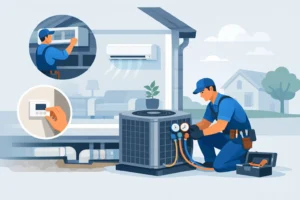
A mechanical professional then reviews the HVAC equipment, ductwork, filtration, outdoor-air intake, exhaust paths, and system controls. Depending on the concern, testing may include temperature and relative humidity readings, carbon dioxide levels as a ventilation indicator, airflow measurements, and targeted checks for particles or other pollutants. Not every property needs every test. The right scope depends on the symptoms, building type, and the decisions the assessment needs to support.
Signs Your Property May Need an Assessment
One isolated odor after a burnt dinner is not usually a building-wide air-quality problem. Recurring issues, however, deserve attention, especially when they affect comfort or daily operations.
Consider scheduling an indoor air quality assessment when occupants regularly report headaches, dry eyes, allergy-like symptoms, or fatigue that improves once they leave the building. Persistent condensation on windows, visible mildew, humid rooms, static electricity, and frequent dust buildup are also useful clues.
HVAC changes can be another trigger. If you have renovated, finished a basement, replaced windows, added rooms, changed occupancy, or installed new heating and cooling equipment, the way air moves through the property may have changed. Tighter buildings can improve energy efficiency, but they may also need a more deliberate approach to fresh-air ventilation.
For property managers and business owners, repeated comfort complaints should not be dismissed as separate issues. If several people mention a stuffy office, strong odors near a common area, or temperature swings on the same floor, there may be a shared ventilation, balancing, filtration, or control issue behind them.
Why Humidity and Airflow Matter So Much
People often focus on airborne particles, but humidity and airflow can be just as influential. Relative humidity that is too low can contribute to dry skin, irritated sinuses, static shocks, and discomfort during the heating season. Humidity that stays too high can create a damp feeling, encourage mold growth where moisture is present, and make cooling systems work harder.
The ideal range depends on the season, outdoor conditions, building construction, and how the property is used. In colder climates, chasing a high indoor humidity setting in winter can lead to window condensation and moisture damage. The better approach is to set realistic levels and make sure the heating, cooling, humidification, dehumidification, and ventilation systems are working together.
Airflow also affects more than temperature. Leaky, undersized, poorly routed, or unbalanced ductwork can leave one area stagnant while another receives too much conditioned air. A high-quality filter cannot solve an airflow problem by itself. Custom ductwork adjustments, proper return-air paths, and professional balancing may be the more meaningful fix.
Assessment First, Equipment Second
It is easy to assume the answer is an air purifier, a humidifier, or a higher-rated filter. Those tools can be helpful, but only when they match the problem and the HVAC system can support them.
For example, a denser filter may capture more fine particles, but it can also restrict airflow if the equipment is not designed for it or if maintenance is neglected. A whole-home humidifier may improve winter comfort, yet it requires correct sizing, water management, and settings to avoid excess moisture. Portable units can help in a specific room, while a central solution may be better for a larger home, office, or multi-unit property.
Ventilation is another area where trade-offs matter. Bringing in outdoor air can dilute indoor pollutants, but it also affects heating and cooling loads. In a well-designed system, equipment such as an energy recovery ventilator can support fresh-air exchange while reducing energy loss. The right choice depends on the building layout, existing mechanical system, occupancy, and budget.
That is why assessment comes before recommendations. The most effective improvements are targeted. They address the source of the concern rather than adding equipment that may not solve it.
Common Improvements After an Assessment
Recommendations should be clear, prioritized, and tied to the findings. Some fixes are simple maintenance items. Others involve system upgrades or building improvements that deliver longer-term comfort.
A property may benefit from filter upgrades and a regular replacement schedule, coil cleaning, duct sealing, or adjustments to supply and return airflow. In other cases, the solution may involve humidity control, an air cleaner, UV treatment for specific equipment applications, improved bathroom or kitchen exhaust, or fresh-air ventilation.
Smart thermostats and controls can also help when they are used to manage the system properly. They can maintain schedules, flag unusual temperature patterns, and support more consistent operation. They do not replace proper mechanical design, but they can make a well-designed system easier to manage.
For commercial spaces and high-rise properties, the solution may include reviewing outside-air delivery, exhaust performance, pressure relationships between spaces, and the condition of shared mechanical equipment. These projects require careful coordination because a change in one area can affect comfort elsewhere in the building.
What You Can Do Before the Appointment
A few observations from the people using the space can make an assessment more efficient. Keep track of where and when the problem occurs, whether it changes with weather, and whether the HVAC system is running at the time. Note recent renovations, water leaks, new furnishings, pest treatments, or changes in cleaning products.
It also helps to know when filters were last changed and whether rooms have closed vents, blocked returns, or portable appliances running regularly. Do not cover supply registers or close multiple vents in an effort to force air into another room. That can disrupt system balance and create new comfort problems.
If you suspect mold, combustion safety concerns, or a serious chemical exposure, treat the issue as urgent and contact the appropriate qualified professional. HVAC assessment is an essential part of healthier indoor air, but some conditions require specialized environmental, remediation, or safety services.
A Long-Term Approach to Healthier Air
Indoor air quality is not a one-time project for every property. Filters load up, seasons change, families grow, tenants change, and mechanical equipment ages. Regular HVAC maintenance gives professionals a chance to spot airflow restrictions, drainage issues, worn components, and control problems before they become larger comfort concerns.
For homeowners, a maintenance plan can help keep heating, cooling, filtration, and humidity equipment performing as intended. For businesses and property managers, planned service supports more predictable operation, fewer disruptive repairs, and a better experience for occupants.
At Alfa Mechanical Inc., we approach air-quality concerns the same way we approach every comfort issue: listen first, inspect carefully, and recommend work that makes sense for the property. Whether the issue is a single uncomfortable room, persistent humidity, or a complex commercial ventilation concern, the best next step is a clear assessment and a plan built around the people who use the space every day.
Healthy indoor air should not be a mystery. When a space feels stale, damp, dusty, or difficult to keep comfortable, a careful evaluation can turn those everyday frustrations into practical, lasting improvements.