A furnace can run every day and still leave bedrooms cold, make the basement feel damp, or drive up utility bills. That is why a high efficiency furnace installation is more than replacing one metal cabinet with another. The right system must be sized for the building, matched to the ductwork, vented correctly, and set up to deliver steady heat where people actually live and work.
For homeowners, builders, and property managers, the goal is simple: reliable comfort without paying to heat air that escapes, overheats one area, or never reaches another. A thoughtful installation protects that goal long after the first cold night of the season.
What High Efficiency Furnace Installation Really Means
A high-efficiency furnace converts more of its fuel into usable heat than older standard-efficiency equipment. Its efficiency is measured by Annual Fuel Utilization Efficiency, or AFUE. A furnace with a 96% AFUE rating is designed to turn roughly 96 cents of every fuel dollar into heat, while the remainder is lost through the heating process.
That rating matters, but it is not the whole story. A premium furnace installed without proper airflow, correct gas piping, appropriate venting, or calibrated controls will not perform as intended. In some cases, an oversized unit can create more temperature swings and noise than the older furnace it replaced.
High-efficiency equipment typically uses sealed combustion and a second heat exchanger to capture heat that would otherwise leave through the vent. Because the exhaust is cooler, these systems often use PVC venting rather than a traditional metal chimney liner. That creates installation flexibility, but it also requires careful planning for vent routing, drainage, termination locations, and local code requirements.
Start With the Home or Building, Not the Equipment
The most important decision often happens before a furnace model is selected. A contractor should assess the heating load of the space rather than simply match the capacity of the existing furnace. Older equipment may have been oversized from the start, or the building may have changed through renovations, new windows, insulation improvements, additions, or changes in occupancy.
A proper load calculation considers square footage, ceiling height, insulation levels, window area, air leakage, orientation, and local winter design temperatures. For a commercial space or multi-unit building, it should also account for operating schedules, internal heat from equipment, zoning, and the needs of different occupied areas.
This is where “bigger is better” can become an expensive mistake. An oversized furnace heats the space too quickly, then shuts off before it can circulate air evenly. Frequent starts and stops can increase wear, reduce comfort, and make rooms feel uneven. A correctly sized furnace may run longer during the coldest weather, but that steady operation is often exactly what creates more even, dependable warmth.
Ductwork Has a Major Effect on Comfort
A new furnace has to work with the air-delivery system already in place. Restrictive ducts, undersized return-air pathways, disconnected runs, and leaking joints can limit performance regardless of the furnace’s AFUE rating.
Before installation, the duct system should be evaluated for airflow capacity and condition. In some homes, targeted duct modifications, additional returns, or custom sheet-metal work can make a significant difference. In offices, retail spaces, and larger residential projects, zoning and duct design may be needed to solve comfort issues between floors or across differently used areas.
Airflow also affects equipment longevity. When a furnace cannot move enough air, it may overheat, cycle unnecessarily, or place strain on key components. Addressing ductwork at the time of replacement is often more practical than installing a new furnace first and trying to correct comfort problems later.
Choosing Features That Fit Your Needs
Not every high-efficiency furnace is the same. The best choice depends on the building, the existing HVAC system, comfort expectations, and budget.
A single-stage furnace operates at full output whenever it runs. It can be a practical choice for some smaller homes or straightforward replacement projects. Two-stage furnaces can operate at a lower output during milder weather and increase capacity when outdoor temperatures drop. This can help reduce temperature swings and improve day-to-day comfort.
Variable-speed blower motors add another layer of control. Rather than turning on at one fixed speed, they can adjust airflow more gradually. This often means quieter operation, better air circulation, and improved compatibility with central air conditioning, filtration, humidification, and smart thermostats.
For households concerned about dry winter air, dust, allergies, or inconsistent room temperatures, it may make sense to consider indoor air-quality improvements at the same time. A furnace installation can be an opportunity to review filtration, humidifiers, UV options where appropriate, and thermostat placement. The right recommendation depends on the specific concern. A better filter alone will not solve a duct leakage issue, and a smart thermostat cannot compensate for improperly sized equipment.
What to Expect During Installation
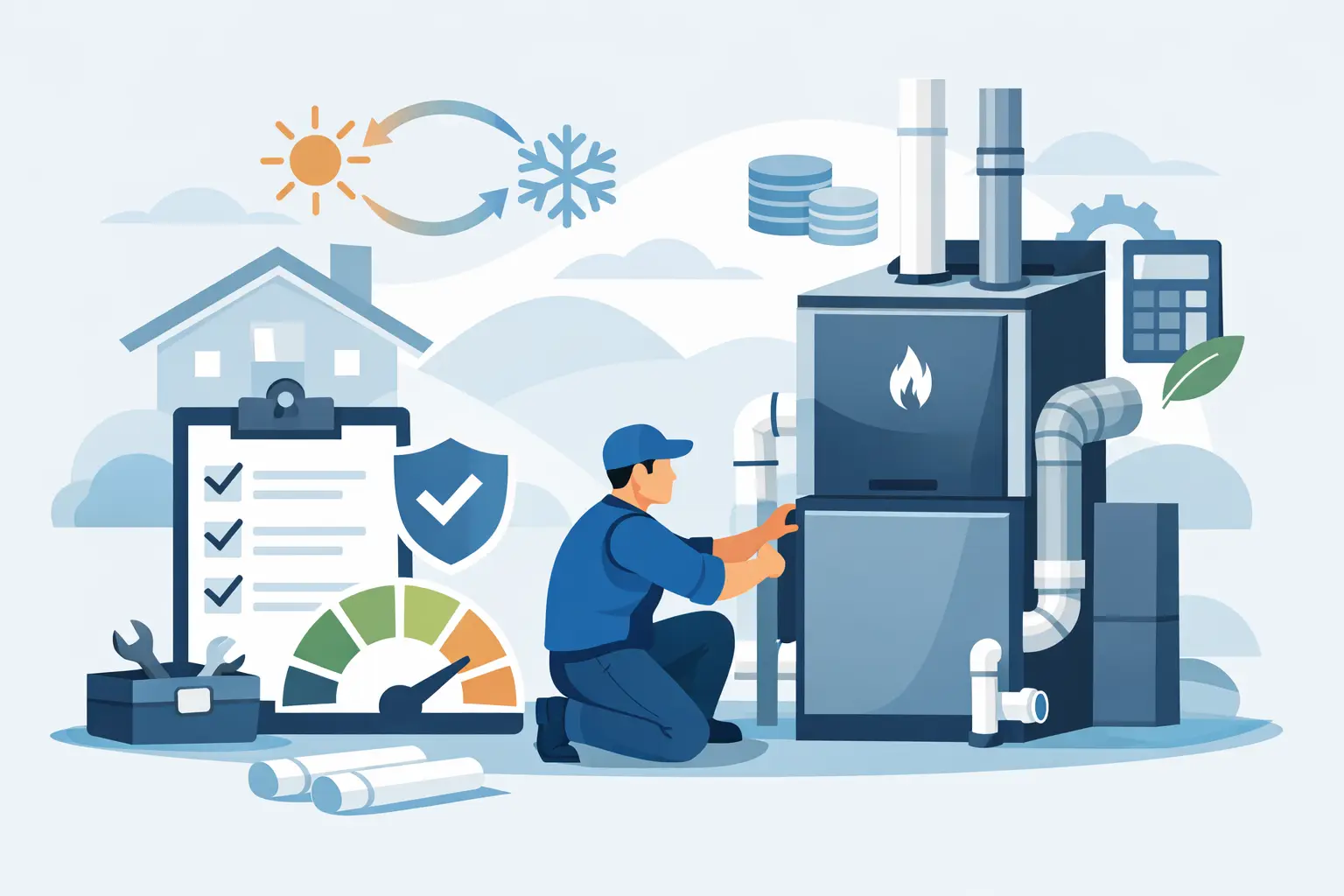
A professional high efficiency furnace installation begins with preparation. The installation team should confirm equipment specifications, inspect the installation area, review venting and condensate drainage requirements, and protect the work area before removing the existing unit.
Once the old furnace is disconnected and removed, the new system is positioned and connected to the ductwork, gas line, electrical supply, venting, and condensate drain. High-efficiency furnaces produce condensation during operation, so that drainage must be correctly routed and protected from freezing. In cold climates, poor condensate planning can lead to shutdowns when the system is needed most.
The work does not end when the furnace starts. Startup and commissioning are essential. Technicians should verify gas pressure, temperature rise, airflow, safety controls, venting operation, thermostat communication, and combustion performance. They should also explain filter replacement, thermostat use, warranty registration, and the recommended maintenance schedule.
For occupied homes and businesses, timing matters too. Replacing a furnace before it fails provides more control over equipment selection and scheduling. Emergency replacement is possible, but a planned project gives more room to assess ductwork, consider comfort upgrades, and avoid rushed decisions during a cold-weather breakdown.
Costs, Savings, and the Value of the Full System
The installed cost of a high-efficiency furnace varies based on capacity, efficiency level, staging, blower technology, venting complexity, duct modifications, electrical work, and controls. A direct replacement with accessible vent routes is very different from a retrofit requiring new drains, redesigned returns, or custom duct transitions.
The lowest initial price is not always the lowest long-term cost. Higher-efficiency equipment can reduce fuel use, while variable-speed and two-stage features may improve comfort and limit unnecessary cycling. Still, projected savings depend on how the building is used, how well it is insulated, fuel prices, thermostat settings, and the condition of the air-distribution system.
For property owners managing larger upgrades, financing, leasing, or rental options may make a needed replacement easier to plan without compromising on quality equipment and installation standards. It is worth reviewing warranty coverage as well. A strong warranty is valuable, but dependable service and correct installation are what help protect the equipment from the beginning.
Keep the New Furnace Performing Well
Even the best installation needs regular care. Replace or inspect filters on schedule, keep supply and return vents clear, and pay attention to new noises, uneven temperatures, or unexpected cycling. Annual professional maintenance helps confirm safe operation, clean key components, and identify small issues before they become no-heat calls.
For commercial properties and multi-unit buildings, preventive service agreements can reduce disruption by keeping maintenance organized and equipment history documented. That kind of ongoing attention is especially valuable when one heating issue can affect tenants, staff, customers, or multiple occupied floors.
At Alfa Mechanical Inc., the focus is not simply on getting heat back on. It is on providing a system that suits the property, supports healthier indoor comfort, and has reliable service behind it for the seasons ahead.
A furnace replacement is a chance to fix the comfort problems you have learned to live with. Ask for an assessment that looks beyond the equipment label, because the right installation should make winter feel less like something your building has to endure.