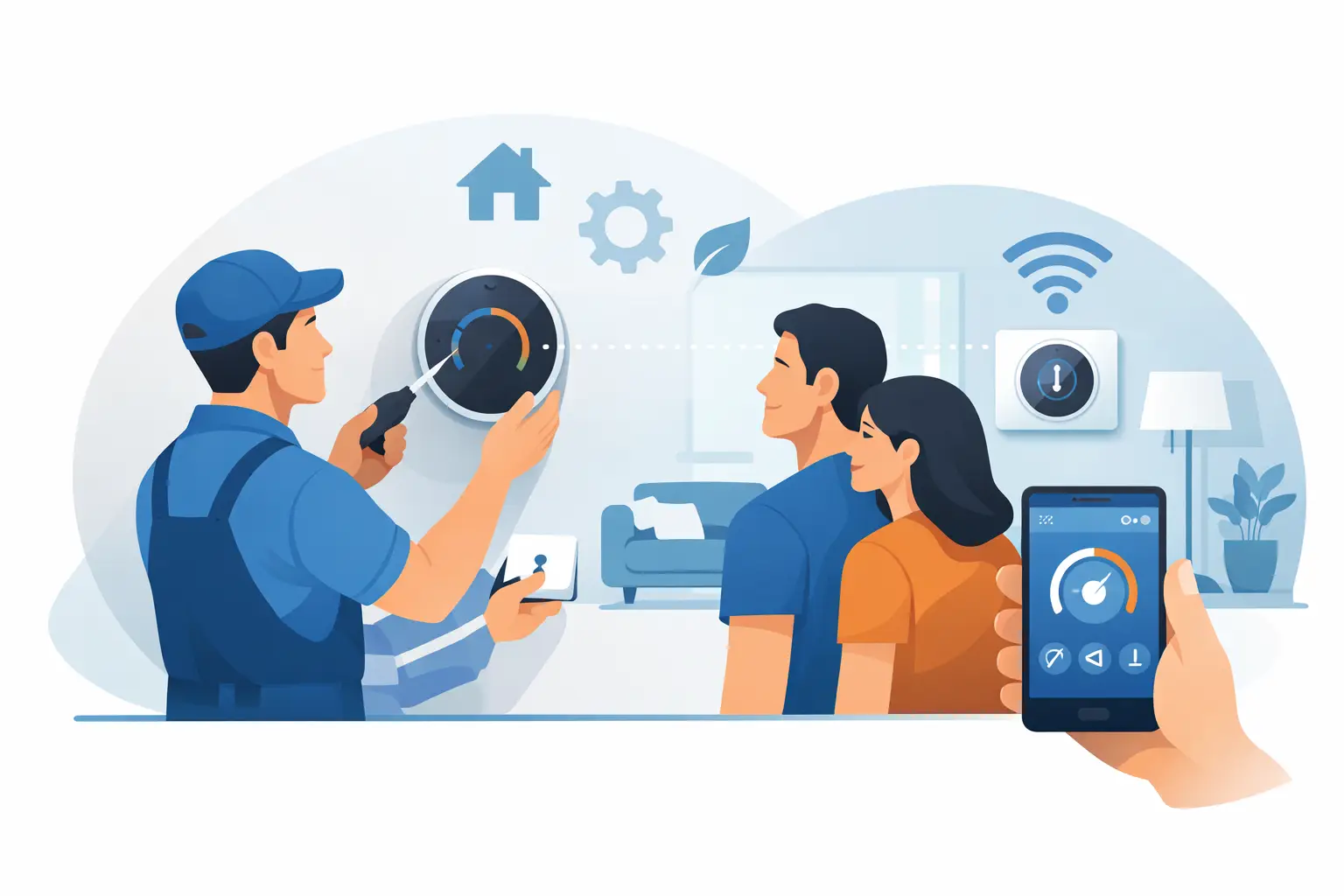
A smart thermostat should make your home or business easier to manage, not leave you wondering why one room is too warm, another is too cold, or the equipment is running at the wrong time. A professional smart thermostat installation service starts with the system behind the wall, making sure the control is compatible with your heating and cooling equipment and configured for the way you use the space.
For many property owners, the appeal is simple: better comfort, more control, and a clearer view of energy use. But the thermostat itself is only one part of the equation. The quality of the installation, wiring, setup, and system calibration determines whether those benefits show up in daily life.
What a Smart Thermostat Can Improve
Smart thermostats can help maintain more consistent temperatures by learning schedules, responding to occupancy settings, and allowing adjustments from a phone or connected device. That can be useful for busy households, offices with changing hours, rental properties, and spaces that sit empty for part of the day.
The right settings may also reduce unnecessary heating and cooling. Lowering the temperature when a building is unoccupied in winter, or easing cooling demands during vacant summer hours, can help control operating costs. The savings depend on your equipment, building insulation, habits, and existing temperature settings. A smart thermostat is not a cure for an oversized furnace, leaky ducts, or an aging air conditioner, but it can help a properly operating system run more thoughtfully.
It also gives many owners greater visibility. Runtime reports and alerts can reveal when equipment is operating longer than expected. That information can be helpful when deciding whether a filter needs changing, a service visit is needed, or a comfort complaint points to a larger HVAC issue.
Smart Thermostat Installation Service Begins With Compatibility
Not every thermostat works with every HVAC system. Before choosing a model, a technician should identify the equipment you have, how it is wired, and how many stages or zones it controls. A basic single-stage furnace and air conditioner may have different requirements than a heat pump with auxiliary heat, a boiler with hydronic zones, or a high-rise fan coil unit.
This matters because an incorrect setup can affect comfort and equipment performance. A heat pump, for example, needs thermostat settings that recognize when to use the compressor and when auxiliary heat is necessary. If those settings are wrong, the system may rely too heavily on more expensive backup heat or fail to maintain the desired indoor temperature during colder weather.
Hydronic heating calls for equal care. Boilers, radiant floors, and zone valves often require controls that are selected and wired for the specific application. The same is true for commercial spaces, where rooftop units, make-up air equipment, and multi-zone controls can have more complex operating sequences.
The Role of the Common Wire
Many smart thermostats need a common wire, often called a C-wire, to provide steady power. Some newer models can work without one, but that does not always mean they are the best choice for every system. Batteries may drain quickly, the thermostat may lose its connection, or certain features may not function reliably.
A professional installation includes checking the available wiring and determining the safest solution. In some cases, an unused wire can be repurposed. In others, new wiring, a compatible adapter, or a different thermostat model may be the better answer. The goal is dependable operation, not simply getting a screen to turn on.
What Professional Installation Includes
A qualified technician does more than remove an old thermostat and attach a new one. The process begins with a review of the equipment, existing controls, wiring condition, and the needs of the people using the building. That conversation matters. A family that prefers cooler sleeping temperatures needs different programming than an office that opens at 7 a.m. and closes at 6 p.m.
The installer then confirms compatibility, safely disconnects the existing control, labels and verifies wiring, and installs the new thermostat in an appropriate location. Placement can affect performance. A thermostat near direct sunlight, a supply vent, a kitchen, or an exterior door may sense temperatures that do not represent the rest of the space.
After the physical installation, the technician configures the thermostat for the correct equipment type and tests heating, cooling, fan operation, and any special functions. For connected models, this may include helping with Wi-Fi setup and reviewing app controls. The final step should be practical guidance: how to change schedules, use vacation settings, read alerts, and know when to call for service.
When a Smart Thermostat May Not Solve the Problem
Smart controls are valuable, but they should not be used to hide an HVAC problem. If certain rooms are consistently uncomfortable, the cause may be undersized or poorly designed ductwork, restricted airflow, an aging blower motor, poor insulation, or an unbalanced hydronic system. A thermostat can show the symptom, but it cannot repair the source.
The same applies when heating or cooling cycles constantly. A system that starts and stops too often may have a control issue, incorrect equipment sizing, or a maintenance concern. If it runs for hours without reaching the set temperature, there may be a refrigerant, airflow, combustion, or building-envelope issue that deserves a professional assessment.
For larger homes and commercial buildings, zoning may be a better comfort investment than a single advanced thermostat. Separate zones give different areas their own temperature control, which is often more effective when sun exposure, occupancy, floor levels, or operating hours vary significantly. The right recommendation depends on the building, not on the newest feature list.
Choosing the Right Control for Your Property
A good thermostat should suit your equipment and your routine. Some owners want simple scheduling and reliable temperature control. Others need remote access for a second property, usage reports, humidity monitoring, or alerts for a property manager. Commercial applications may need lockable settings, occupancy scheduling, and controls that support multiple operating periods.
It is also worth considering who will use it every day. A feature-packed touchscreen may be a good fit for a tech-comfortable household, while a straightforward control with clear buttons may be more practical for a tenant, senior family member, or shared workplace. The best thermostat is one that people can operate confidently.
At Alfa Mechanical Inc., recommendations are based on the heating and cooling system already serving the property, the comfort concerns you want to address, and the level of control you actually need. That approach helps prevent unnecessary upgrades and supports a solution built for long-term use.
Protecting Comfort Through Every Season
A smart thermostat works best as part of a well-maintained HVAC system. Seasonal maintenance helps confirm that filters are clean, electrical connections are secure, condensate drainage is clear, and heating and cooling equipment can respond properly to thermostat commands. It also gives a technician the opportunity to catch small concerns before they become an inconvenient breakdown.
For property managers and business owners, connected controls can add useful oversight, but they do not replace responsive service. An alert about an unusual temperature is most valuable when there is a trusted mechanical partner ready to inspect the equipment and restore comfort.
If you are replacing an outdated thermostat, completing a renovation, or looking for more control over a home or commercial property, start with a professional assessment of the system you have. A properly selected and installed smart thermostat can make comfort feel less like a daily adjustment and more like something your property handles reliably in the background.