
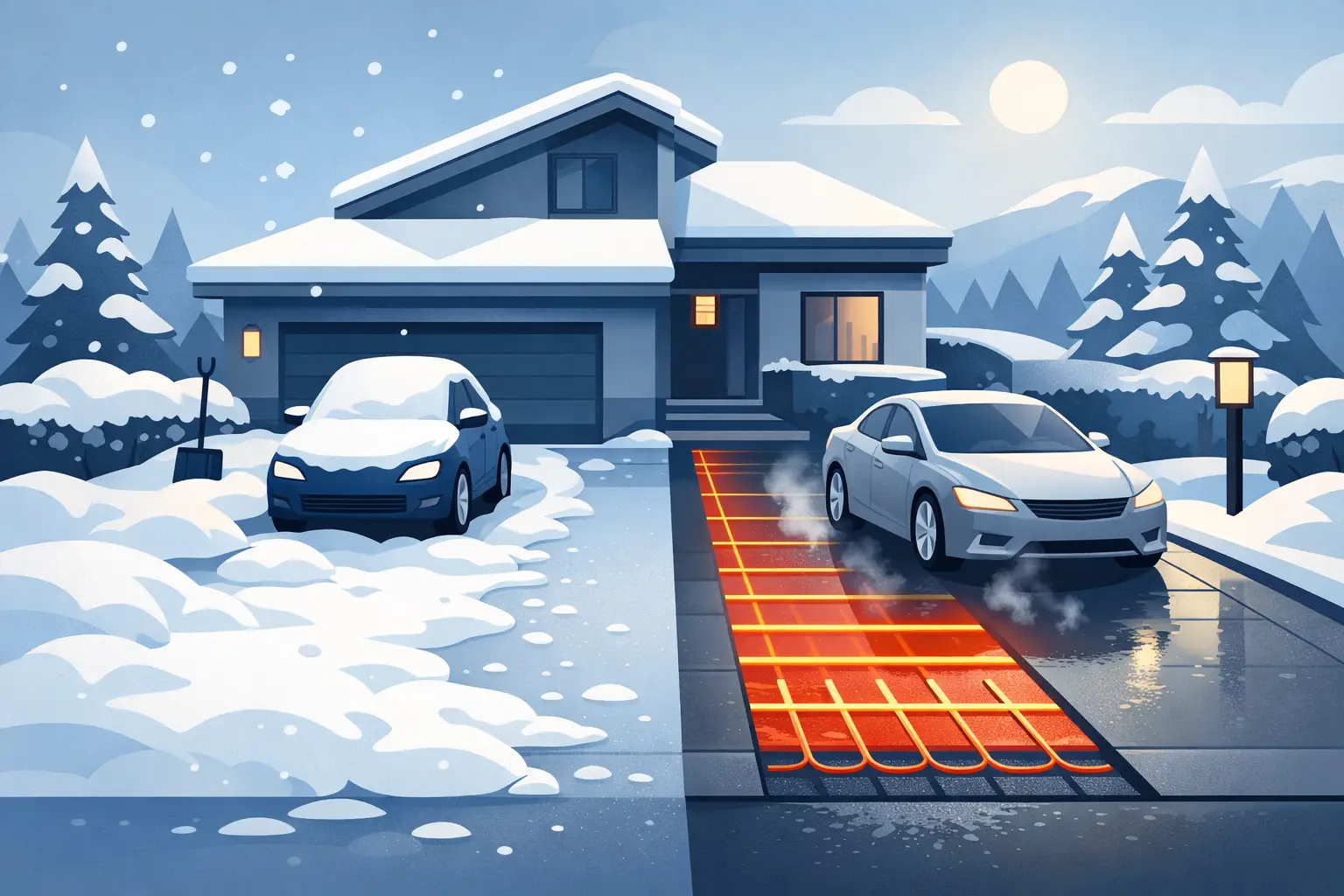
A driveway snow melting system changes the way a property handles winter. Instead of waking up early to shovel, spread salt, or wait for a plow, homeowners and property managers can keep high-use surfaces clear with heated pavement designed to respond when snow and ice arrive.
For a steep residential drive, a busy commercial entrance, a condo ramp, or an accessible walkway, the value is about more than convenience. It is about reducing slip risks, protecting concrete and landscaping from deicing products, and keeping vehicles and people moving when conditions are at their worst.
What Is a Driveway Snow Melting System?
Most permanent snow melting systems use hydronic heating. Flexible tubing is installed below the driveway surface, and warm water mixed with glycol circulates through the loops. A boiler or other dedicated heat source warms the fluid, while pumps, controls, manifolds, and sensors distribute heat where it is needed.
When the system detects moisture and freezing conditions, it can activate automatically. Heat rises through the concrete, pavers, or asphalt surface, melting snow before it compacts into slippery ice. The melted water then needs a clear path to drain away, which is why surface slope and drainage planning are central to a successful installation.
Electric snow melting systems are also available. They use heating cables or mats beneath the surface and can suit smaller areas. For larger driveways, long ramps, and commercial applications, hydronic systems are often the more practical choice because they can be designed around the property’s heating capacity and operational needs.
Where Heated Driveways Make the Most Sense
A snow melting system does not have to cover every square foot of pavement to be useful. The right coverage depends on how the property is used, the driveway layout, and the owner’s priorities.
A full system can be a strong fit for a primary residence where safety and daily access matter most, especially when the driveway is steep or shaded. At commercial properties, the first priorities may be front entrances, loading areas, parking ramps, emergency access routes, and accessible paths of travel. Multi-unit buildings often benefit from heating the areas where snow removal is hardest to manage consistently.
For some properties, heated tire tracks are the sensible middle ground. They improve traction and reduce shoveling while keeping installation and operating costs lower than a full-coverage design. A professional consultation can help determine whether full coverage, tire tracks, walkways, or a combination of zones will deliver the best result.
What Affects Performance?
A well-designed driveway snow melting system does not simply turn on at a fixed outdoor temperature. It needs to account for snowfall intensity, wind exposure, surface material, heat loss to the ground, and drainage. A system that is undersized may struggle during heavy snowfall. One that is poorly controlled can use more energy than necessary.
The surface matters, too. Concrete is a common choice because it works well with embedded tubing and provides a durable finished surface. Pavers can also be installed over a hydronic system, but the base preparation and tube layout require careful coordination. Asphalt installations are possible, though temperature limits during paving must be considered to protect the tubing.
Insulation beneath the system can reduce downward heat loss and improve response time. In colder climates, insulation is especially valuable where ground conditions and system run times make efficiency a priority. Proper spacing of the tubing is equally critical. Areas exposed to greater heat loss, such as driveway edges and wind-prone sections, may need a more detailed design than a simple grid pattern.
Controls Make a Noticeable Difference
Modern controls are what keep a heated driveway practical. Moisture and temperature sensors can start the system when snow begins and stop it after the pavement is clear. Some designs use an automatic mode for daily operation and a manual override for unusual weather events.
Zoning provides another level of control. A homeowner may want the driveway, front walk, and steps to operate independently. A commercial property may need separate zones for an entrance, ramp, and loading area. This approach helps direct heat where it has the greatest safety and operational value.
Installation Is Easiest During Construction, But Retrofits Are Possible
The best time to install snow melting is during a new build or when an existing driveway is already scheduled for replacement. The excavation is open, the surface has not been installed, and the mechanical equipment can be planned as part of the larger heating design. Builders also have an easier time coordinating drainage, electrical service, gas capacity, and finished elevations before construction is complete.
Retrofit projects are possible when a driveway has reached the end of its service life or when an owner is ready to replace damaged concrete, pavers, or asphalt. The existing surface is removed, the base is evaluated, and the new snow melting assembly is installed before the replacement surface goes in.
Trying to add a permanent system under a driveway that is still in good condition is rarely the most cost-effective path. In that case, it may make more sense to heat a high-risk walkway, stairs, or a smaller targeted area until a future driveway replacement is planned.
The Mechanical Design Deserves the Same Attention as the Pavement
The tubing below the driveway gets most of the attention, but the equipment room is where long-term reliability begins. A hydronic snow melt system may use a dedicated high-efficiency boiler, share capacity with an existing hydronic heating plant, or be integrated into a broader mechanical design. The correct approach depends on available capacity, system size, operating expectations, and the property’s other heating loads.
The design should include properly sized pumps, manifolds, expansion equipment, glycol protection, isolation valves, and accessible service points. Commercial and high-rise projects may also require additional engineering coordination, controls integration, redundancy considerations, and a clear plan for maintenance access.
This is not an area for guesswork. A system that looks simple at the driveway surface involves plumbing, heating, controls, electrical coordination, and civil drainage details below it. Working with an experienced mechanical contractor helps prevent costly changes after the concrete has been poured.
Cost, Energy Use, and the Real Trade-Offs
The upfront cost of a driveway snow melting system is higher than conventional snow removal because it includes excavation, tubing, mechanical equipment, controls, and surface replacement or installation. The total varies substantially based on area, surface type, heat source, zoning, drainage requirements, and whether the project is part of new construction or a retrofit.
Operating cost also depends on local utility rates, weather, insulation, control settings, and how often the system runs. Heating a small set of tire tracks during snow events is very different from maintaining a large commercial ramp through a long winter. Automatic sensors and well-designed zoning help avoid wasting energy during dry, cold weather when melting is not needed.
The return is not always measured as a simple dollar-for-dollar payback. For many homeowners, it is fewer dangerous trips with a shovel and less dependence on salt that can damage concrete, gardens, and nearby finishes. For property managers and businesses, the value may include cleaner entrances, more dependable access, reduced snow-removal logistics, and lower exposure to slip-and-fall concerns.
Planning Questions to Ask Before You Build
Before choosing a system, start with the property’s winter challenges. Is the driveway steep? Does snow drift across it? Does shade cause ice to linger? Is there reliable drainage at the bottom of the slope? Are you replacing the driveway anyway, or planning a new home, commercial site, or multi-unit development?
It also helps to consider how the system will be serviced. Hydronic equipment benefits from regular maintenance, including checks of glycol concentration, pumps, pressure, controls, and boiler performance. A maintenance plan keeps the system ready before the first major storm rather than discovering an issue when access is already blocked.
At Alfa Mechanical Inc., we approach snow melting as part of the property’s complete comfort and mechanical plan. The right design should fit the driveway, the heating equipment, and the way people use the space – not force a one-size-fits-all solution.
A clear driveway starts with a clear plan. If snow and ice regularly create a safety or access problem at your property, schedule the discussion before the pavement work begins. That gives your mechanical team the room to design a system that keeps winter maintenance simpler for years to come.